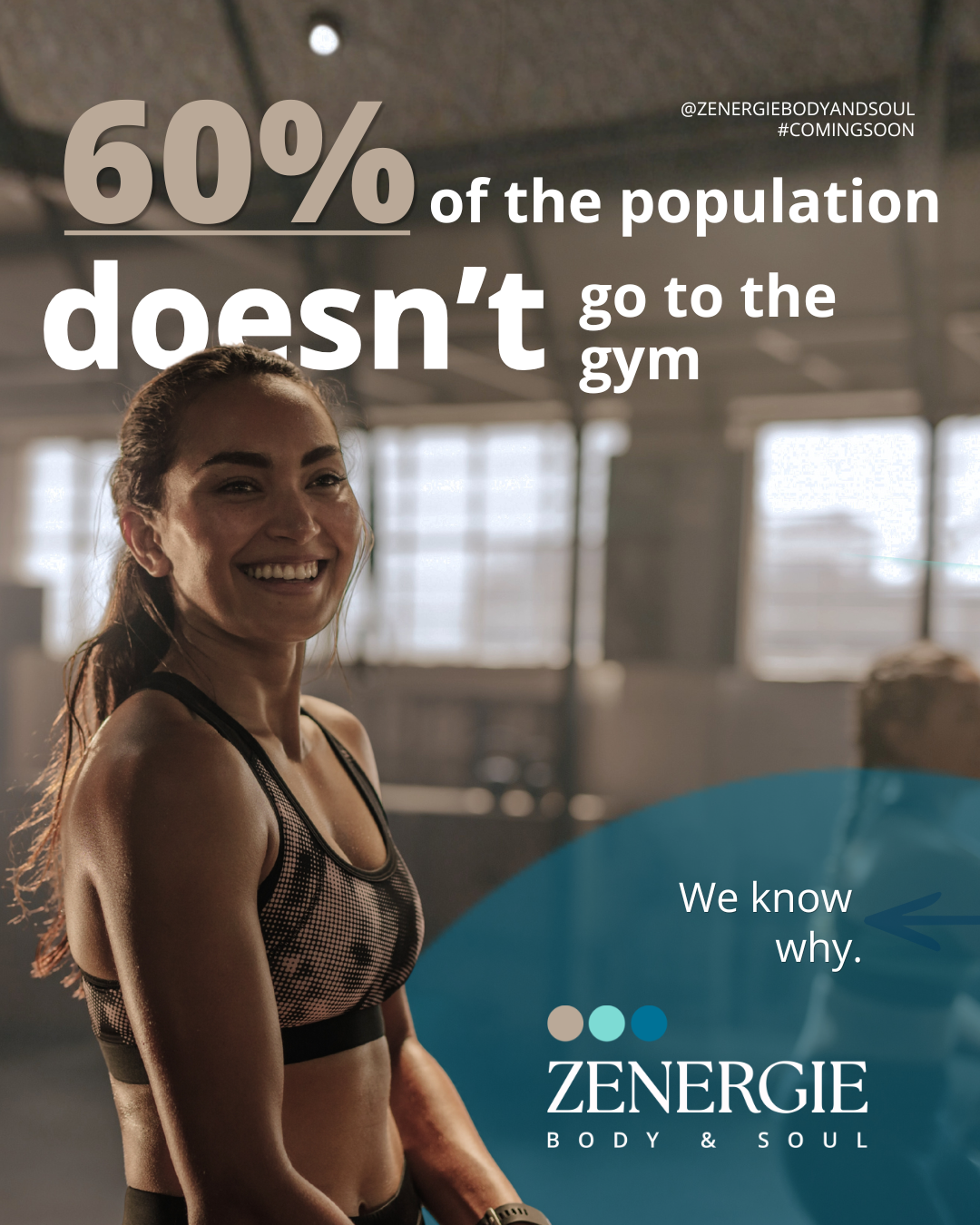
Why 60% of the Population Does Not Go to the Gym
The fitness industry is changing, but not every business model is prepared for what comes next.
A large proportion of the population does not attend a gym. This is often interpreted as a lack of motivation, discipline or interest in personal health. In reality, the issue may be very different.
Many people want to feel better, become stronger and protect their long-term health. They understand the importance of movement and prevention. However, they do not feel represented by the traditional gym experience.
That disconnect is not a failure on the part of the consumer. It is a clear market opportunity.
The Traditional Gym Model Does Not Work for Everyone
For decades, the fitness industry has largely focused on aesthetics, performance and physical transformation.
Its communication often highlights younger, highly trained bodies, intense workouts and rapid results. Its facilities can feel crowded, impersonal or intimidating, particularly for beginners, older adults and people returning to exercise after a long break.
This model continues to attract a particular audience, but it leaves many others behind.
Some people feel unsure about how to use the equipment. Others are uncomfortable exercising in environments where they feel observed or compared. Many begin with enthusiasm but receive too little support to build a sustainable routine.
The result is not a lack of demand for health. It is a mismatch between what people need and what many fitness businesses currently provide.
People Want Health, Not Intimidation
The majority of adults are not training to become elite athletes.
They want to move without pain, preserve their strength, maintain their mobility and continue performing everyday activities independently. They want more energy, better sleep and improved mental well-being.
They also want to feel comfortable.
For many potential members, the atmosphere of a fitness space matters as much as the training itself. They are looking for guidance rather than pressure, personal attention rather than anonymity, and encouragement rather than comparison.
A successful fitness experience should help people feel capable from the moment they arrive.
When the environment does not provide that sense of safety and belonging, many people simply choose not to participate.
The Problem Is Not a Lack of Motivation
It is easy to assume that people who do not attend gyms are unmotivated. However, motivation is strongly influenced by the environment.
People are more likely to remain active when exercise feels accessible, relevant and connected to their personal goals. They are also more likely to continue when they receive support, understand what they are doing and can see meaningful progress.
Traditional memberships frequently provide access to a building and equipment, but not necessarily the structure needed to create a lasting habit.
Without guidance, many members do not know where to begin. Without connection, attending can feel like another obligation. Without a clear purpose, motivation gradually disappears.
The future of fitness must therefore move beyond access. It must create experiences that help people participate consistently.
A Growing Demand for Prevention
Health is increasingly becoming proactive rather than reactive.
People are beginning to think about how the decisions they make today will affect their quality of life in the future. They are investing more intentionally in strength, mobility, recovery, nutrition and mental well-being.
This shift is particularly relevant as populations age.
Living longer is no longer the only objective. People want to preserve their healthspan: the years of life spent feeling capable, independent and mentally engaged.
Exercise plays an important role in this process. Strength training can help preserve muscle mass and support mobility. Regular movement contributes to cardiovascular and metabolic health. Mindfulness and recovery practices can help manage stress and improve overall well-being.
The demand is growing, but many consumers are still searching for a model that brings these elements together in a welcoming and coherent way.
Fitness Must Become More Human
The next generation of fitness spaces will need to understand that people are not simply looking for machines, classes or facilities.
They are looking for support.
They want professionals who know their goals, understand their limitations and can adapt the experience to their needs. They want to feel recognised rather than anonymous.
This is especially important for people who may have never exercised consistently before. Entering a traditional gym can be confusing and uncomfortable. A more human model removes that uncertainty.
It provides clear guidance, appropriate progression and an environment in which asking for help feels normal.
When people feel supported, their relationship with exercise changes. Training becomes less intimidating and more sustainable.
The Importance of Personalisation
Personalisation does not always require individual training sessions.
Small groups, intelligent programming and attentive coaching can create an experience that feels highly personal while preserving the motivation and social energy of training with others.
An effective coach can adapt movements, monitor technique and understand when a participant should progress or reduce intensity. This increases confidence and can help make exercise safer and more effective.
Personalisation also means recognising that everyone has a different reason for training.
One person may want to improve balance. Another may be rebuilding strength after a period of inactivity. Someone else may be preparing for an active retirement or trying to manage daily stress.
The programme should respond to the person, rather than forcing the person to adapt to a standardised model.
Community Is a Competitive Advantage
One of the greatest weaknesses of many traditional gyms is the absence of meaningful connection.
Members may visit the same facility for years without speaking to anyone. They train alone, receive little feedback and disappear without being noticed when their motivation declines.
A community-driven model creates a completely different experience.
Members know one another. Trainers understand their progress. Attendance becomes connected to relationships and shared routines. People are encouraged not only by their own results, but by the progress of those around them.
This sense of belonging can be a powerful factor in long-term consistency.
Community transforms a fitness space from somewhere people occasionally visit into somewhere they genuinely want to return to.
Wellness Is Becoming More Integrated
Physical health, mental well-being and social connection are not separate areas of life.
They influence one another.
Someone who is constantly stressed may struggle to recover, sleep or remain consistent with exercise. A person who feels socially isolated may find it harder to maintain healthy routines. Declining physical strength can reduce confidence and participation in everyday activities.
The future of wellness must therefore be more integrated.
Fitness spaces have the opportunity to support the whole person by combining intelligent training with recovery, mindfulness and community. This approach responds more closely to what modern consumers are seeking.
It also creates a more distinctive business proposition than simply providing access to equipment.
An Underserved Majority Represents Opportunity
When such a large proportion of the population does not use traditional gyms, the industry should not simply ask how to sell more memberships.
It should ask why the current experience fails to connect with so many people.
This question reveals an underserved market with significant potential.
Millions of adults are interested in their health but remain outside the conventional fitness system. They are not rejecting movement. They are rejecting environments, messages and experiences that do not feel relevant to them.
A business capable of understanding this audience can unlock demand that already exists.
The opportunity lies in creating a concept that feels welcoming to beginners, valuable to active adults and relevant throughout different stages of life.
From Fitness to Active Longevity
The industry is gradually moving from a narrow focus on exercise toward a broader focus on active longevity.
Active longevity is not about avoiding age. It is about building the physical, mental and social capacity needed to continue living well as the years pass.
This includes preserving muscle, mobility and balance. It also includes managing stress, maintaining social connection and having the confidence to remain active.
A longevity-focused fitness model does not promise unrealistic transformation. It provides practical support for a stronger and more independent future.
This positioning speaks to a much wider audience than traditional fitness marketing.
It includes people who may not identify as athletes but who deeply value their health and quality of life.
A Structural Transformation of the Industry
The changes taking place within fitness are not temporary.
They are supported by long-term demographic and cultural trends.
Populations are ageing. Preventive health is becoming more important. Consumers are seeking personalised experiences. Mental well-being is now part of mainstream health conversations. Community and belonging are increasingly valued.
These forces are reshaping expectations.
The successful fitness businesses of the future will not simply compete on price, equipment or facility size. They will compete on relevance, trust and the quality of the member experience.
They will create environments that people can enter confidently and continue using throughout different stages of their lives.
Zenergie Body & Soul: A New Model for a New Audience
Zenergie Body & Soul was created in response to this transformation.
It is not designed as another traditional gym. It is a longevity-focused model built around strength, mindfulness, intelligent training and meaningful community.
The concept recognises that people need more than access to exercise.
They need guidance that helps them train safely and effectively. They need an environment in which they feel comfortable. They need a community that supports consistency and a clear reason to keep moving.
Zenergie brings these elements together to serve an audience that remains largely underserved by the current market.
Its objective is not simply to help people work out. It is to help them remain stronger, healthier and more capable for longer.
A Business Opportunity with Purpose
This transformation creates a compelling opportunity for entrepreneurs and investors.
The demand for health, prevention and integrated well-being continues to grow. At the same time, traditional fitness businesses are struggling to connect with a substantial percentage of the population.
A differentiated concept can occupy the space between fitness, wellness and longevity.
This is commercially relevant because it responds to a large and expanding market. It is also socially meaningful because it helps more people access the benefits of regular movement and preventive health.
A business with purpose does not need to sacrifice profitability. When a concept solves a genuine and growing problem, purpose and commercial value can reinforce one another.
The Value of Moving Early
Every major transformation creates a period in which the future becomes visible before the market becomes crowded.
That is where the fitness sector stands today.
The limitations of the traditional model are increasingly clear. Consumer expectations are changing, and the demand for longevity-focused experiences is becoming stronger.
However, the category remains open.
There is still room for new brands to establish themselves, secure territories and build recognition before the market reaches full maturity.
Those who enter early have the opportunity to do more than participate. They can help define the standards, values and experiences that shape the next generation of fitness.
The Next Fitness Leaders Will Serve Those Currently Left Out
The future of the industry will not be built only by attracting people who already love gyms.
The greatest growth may come from serving the people who currently feel that gyms are not for them.
This requires listening to their concerns and designing the entire experience around their needs.
It means removing intimidation, increasing support and broadening the definition of progress. It means recognising that success can be gaining confidence, maintaining independence, improving energy or simply becoming consistent.
A model designed around these outcomes can create deeper engagement and more durable relationships with members.
The Opportunity Is Already Here
The fact that 60% of the population does not go to the gym should not be viewed only as a negative statistic.
It represents an enormous opportunity to rethink the sector.
These people are not necessarily uninterested in health. Many are waiting for a model that feels relevant, welcoming and sustainable.
The demand for prevention, strength, mobility, mental well-being and community is already growing. The businesses that respond to it intelligently will be better positioned for the future.
Fitness is changing.
The question is not whether the industry will evolve, but who will lead that evolution.
For entrepreneurs and investors exploring opportunities with purpose, this is the moment to look closely at where the market is heading and position themselves within the next generation of wellness.