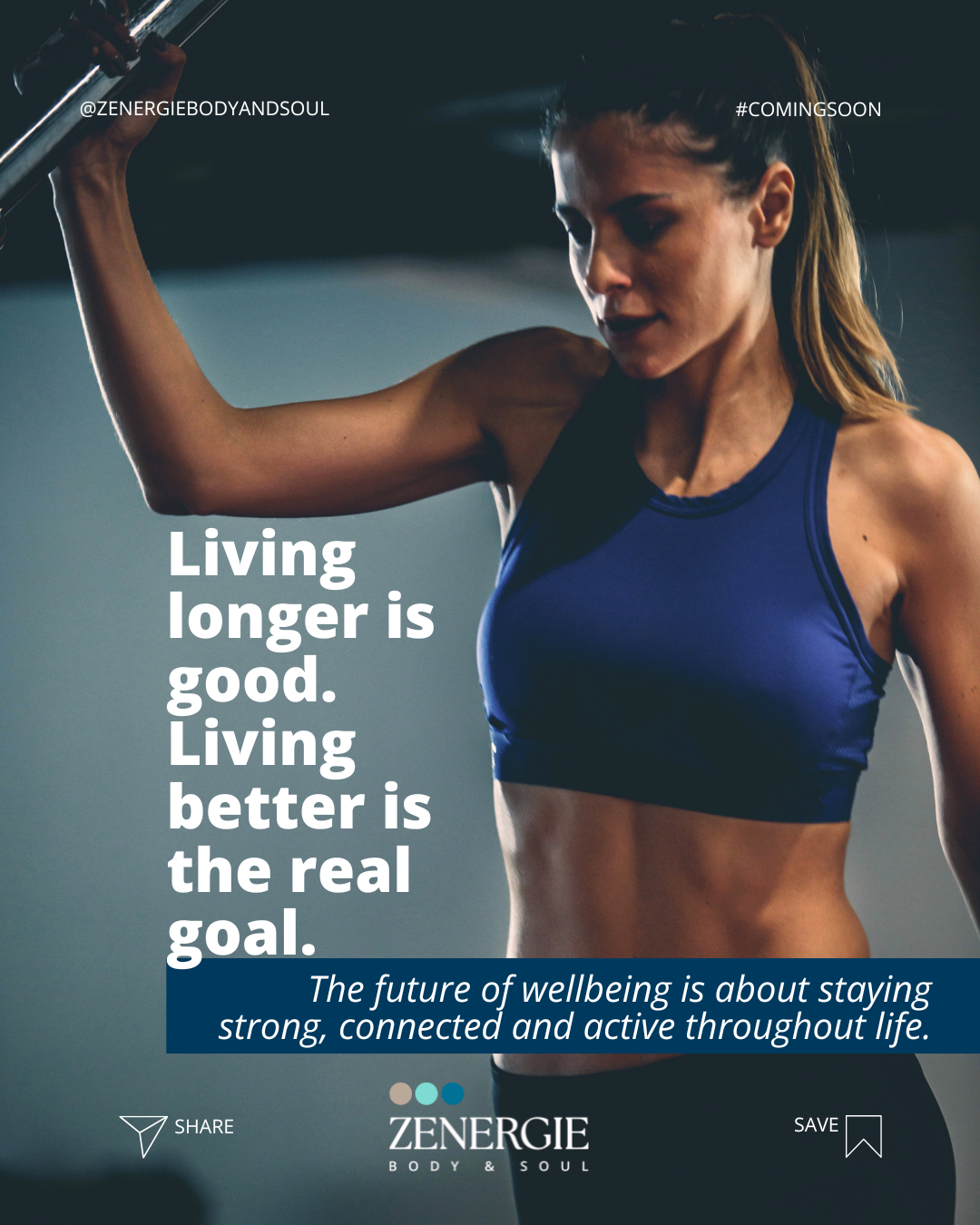
Living Longer Is Good. Living Better Is the Real Goal.
The market is no longer looking for more traditional gyms.
It is looking for solutions that help people live longer, remain stronger and preserve their vitality throughout every stage of life.
This shift is transforming the fitness and wellness industries. Consumers are becoming less interested in short-term physical transformation and more focused on healthspan: the number of years they can live with energy, mobility, independence and a strong sense of well-being.
Active longevity is no longer a niche idea. It is becoming one of the most important global movements in health, prevention and fitness.
People are asking a different question.
Not simply, “How can I live longer?”
But, “How can I continue living well?”
The Difference Between Lifespan and Healthspan
Lifespan refers to the total number of years a person lives.
Healthspan refers to the number of those years spent in good health, with sufficient physical and mental capacity to remain active, independent and socially connected.
This distinction is becoming increasingly important.
Living longer has limited value when those additional years are marked by preventable weakness, restricted mobility or declining quality of life.
The real objective is not simply to add more time.
It is to add more capability, confidence and vitality to that time.
This is why the future of wellness is shifting toward prevention, strength and intelligent training.
A Growing Global Demand for Active Longevity
Several powerful trends are accelerating this transformation.
The population over 50 continues to grow year after year. At the same time, consumers are becoming more informed about the relationship between exercise, muscle mass, metabolic health and independence.
Interest in healthy ageing, biological age and preventive wellness has reached unprecedented levels.
People are no longer waiting until significant health problems appear before taking action.
They want to preserve their strength, protect their mobility and maintain the energy required to continue participating fully in life.
This creates growing demand for services that support long-term health rather than short-term appearance.
The Traditional Fitness Model Is No Longer Enough
Many conventional gyms were created around a very different set of priorities.
They focus on access, volume, aesthetics and standardised routines. Their communication often targets younger audiences already familiar with fitness culture.
This model continues to serve some consumers effectively, but it does not respond to the needs of a rapidly expanding longevity market.
Adults focused on healthy ageing are often looking for more guidance, personalisation and purpose.
They want to understand how exercise supports their future.
They want to train safely and efficiently.
They want to feel that the programme has been designed around their body, their goals and their stage of life.
The future of fitness will belong to businesses capable of delivering that experience.
Training More Is Not the Answer
Modern wellness culture often suggests that better results require more effort.
More sessions.
More intensity.
More exhaustion.
But active longevity is not based on training as much as possible.
It is based on training intelligently.
The right exercise, delivered at the right intensity and adapted to the individual, can create meaningful improvements without unnecessary stress or risk.
An intelligent programme considers strength, recovery, mobility, cardiovascular health and consistency.
It recognises that a sustainable routine is more valuable than an extreme programme that cannot be maintained.
The objective is not to leave every session exhausted.
It is to leave the body better prepared for life.
Strength Is the Foundation of Longevity
Strength is one of the most important physical resources we can preserve.
Muscle supports movement, balance, metabolism and joint stability. It helps people perform daily activities independently and creates physical reserve during illness, injury or periods of reduced activity.
As people age, maintaining muscle becomes increasingly relevant.
Without sufficient stimulus, muscle mass and strength can gradually decline. This can affect mobility, energy and confidence.
Strength training helps counter that process.
It does not need to involve bodybuilding or extreme weights.
It can be progressive, personalised and accessible to different ages and ability levels.
The goal is simple: preserve the capacity to keep living actively.
Why Muscle Matters Beyond Appearance
Muscle is not only about how the body looks.
It is metabolically active tissue.
It helps regulate blood sugar, supports insulin sensitivity and influences how the body uses energy. It also contributes to joint protection, posture and physical resilience.
This means that preserving muscle supports both movement and internal health.
A stronger body is often better equipped to manage everyday demands.
It can walk farther, recover more effectively and remain independent for longer.
This is why strength training should be considered part of preventive health, not simply part of fitness culture.
Vitality Means More Than Physical Performance
Vitality is not measured only by speed, weight or athletic ability.
It is reflected in how people feel throughout the day.
Do they have enough energy to work, socialise and enjoy their interests?
Can they recover effectively?
Do they feel mentally clear and emotionally balanced?
A complete longevity model must address these questions.
Physical training is essential, but vitality also depends on sleep, recovery, stress management and social connection.
The body and mind do not operate separately.
A person who is physically strong but constantly exhausted is not experiencing complete well-being.
The future of fitness must therefore become more integrated.
The Role of Community
Human connection is one of the most powerful yet underestimated elements of long-term well-being.
People are more likely to remain consistent when they feel supported and recognised.
A strong community creates accountability, motivation and belonging.
It turns exercise from an isolated task into a shared experience.
This is especially important for adults who do not feel comfortable in conventional gym environments.
A welcoming community can reduce intimidation and help people build confidence.
Members know that their progress is noticed.
Their presence matters.
Their absence matters too.
This creates a deeper and more sustainable relationship with movement.
Zenergie’s Three Pillars
Zenergie Body & Soul responds to this new reality through three core pillars: Strength, Community and Vitality.
Each pillar supports a different but connected dimension of active longevity.
Strength provides the physical capacity required for movement, independence and resilience.
Community creates belonging, accountability and meaningful connection.
Vitality brings together energy, recovery and long-term well-being.
Together, these pillars create a model that goes beyond the traditional gym experience.
The objective is not only to help people exercise.
It is to help them remain active, capable and connected throughout life.
Intelligent Technology and Personalised Training
Technology has the potential to make exercise more precise, accessible and effective.
Used correctly, it can support personalisation, monitor progress and help people train according to their actual abilities.
At Zenergie, EGYM technology plays an important role in this experience.
It helps create structured training programmes adapted to each user, allowing progression to be measured and resistance to be adjusted intelligently.
This reduces uncertainty.
Members do not need to arrive already knowing how to train.
The system, combined with professional guidance, helps provide a clearer and more personalised pathway.
Technology becomes a tool for confidence rather than complexity.
Understanding Biological Age
Chronological age tells us how many years we have lived.
Biological age attempts to reflect how the body is actually functioning.
Although biological age is still an evolving scientific concept, it reflects an important shift in the way people think about health.
Two people of the same chronological age may have very different levels of strength, mobility and metabolic health.
Lifestyle plays an important role in those differences.
Exercise, sleep, nutrition and stress management can influence many of the markers associated with healthy ageing.
The value of intelligent training is not that it promises to stop time.
It is that it helps improve the factors within our control.
Prevention Begins Before Decline
Many people begin thinking seriously about health only after something changes.
They experience pain, reduced energy or difficulty completing activities that once felt easy.
But prevention is most effective before significant decline occurs.
Building strength today helps protect tomorrow’s mobility.
Improving balance today can reduce future risk.
Creating a sustainable exercise habit today provides a foundation that can support health for years.
This is why active longevity is relevant at every age.
It is not only for older adults.
It is for anyone who wants to protect their future physical capacity.
Why the Over-50 Market Matters
The population over 50 represents one of the most important growth audiences in the wellness economy.
This group is becoming larger, more active and more intentional about health.
They are not necessarily looking for traditional gym culture.
They want relevant solutions.
They value professional guidance, safety, personalisation and environments where they feel comfortable.
They are also willing to invest in services that can improve their quality of life.
Despite this, many fitness brands continue competing primarily for younger consumers.
This leaves a major opportunity open.
A concept designed around active longevity can serve a large and growing audience that remains underserved.
Healthy Ageing Is Becoming Mainstream
Healthy ageing is no longer a specialised conversation.
It is influencing consumer products, healthcare, technology and investment.
People are tracking sleep, recovery, activity and other health indicators. They are learning about muscle preservation, metabolic health and preventive exercise.
This awareness is changing expectations.
Consumers want more than access to equipment.
They want expertise and measurable value.
They want to know that their training supports a larger objective.
This creates a market advantage for brands capable of combining evidence-based principles with an engaging and supportive experience.
A New Business Category
The longevity opportunity is creating a new category between fitness, healthcare and wellness.
It is not a hospital.
It is not a traditional gym.
It is a preventive environment where people can build strength, improve vitality and receive support for long-term well-being.
This category has significant potential because it responds to both demographic change and consumer demand.
Populations are ageing.
Healthcare systems are increasingly focused on prevention.
Individuals are investing more intentionally in their future health.
A business model positioned at this intersection has the potential for long-term relevance and scalable growth.
The Value of a Purpose-Driven Model
The most compelling opportunities often combine commercial potential with meaningful impact.
Active longevity does exactly that.
A business that helps people preserve strength, energy and independence responds to a genuine human need.
It can improve individual lives while also building a sustainable customer relationship.
Purpose strengthens the model because members understand the value of what they are doing.
They are not simply purchasing workouts.
They are investing in their future capability.
This creates a deeper level of engagement than a conventional transactional membership.
Retention Through Results and Connection
Long-term business success in fitness depends heavily on retention.
People remain when they experience meaningful benefits and feel connected to the environment.
A longevity-focused model supports both.
Members can observe improvements in strength, mobility and confidence.
Technology helps make progress visible.
Community creates emotional connection and accountability.
Together, these elements give people a reason to continue.
This is particularly valuable in a sector where many traditional memberships are abandoned after only a few months.
The stronger the relationship between the member and the experience, the more sustainable the business becomes.
The Future of Fitness Is Personalised
Standardised exercise programmes are becoming less relevant.
People expect services that reflect their goals, abilities and health priorities.
Personalisation does not need to make a model impossible to scale.
Technology, structured assessments and intelligent programming can deliver individualised experiences within an efficient operating system.
This is one of the advantages of combining professional coaching with EGYM technology.
The member receives a programme that feels personal.
The business benefits from a structured and repeatable framework.
This balance is essential for a future-ready fitness model.
Staying Connected Is Part of Staying Healthy
The image of healthy ageing often focuses only on the body.
But remaining socially connected is equally important.
Movement can create opportunities for interaction, shared experience and belonging.
This is why the community pillar of Zenergie is not secondary.
It is central to the concept.
A studio can become a place where people build relationships while improving their health.
This creates benefits that extend beyond exercise.
Members feel more connected, more motivated and more engaged in everyday life.
Living Longer Is Only Part of the Goal
A longer life is not automatically a better life.
The quality of those years matters.
Can people remain independent?
Can they travel, participate in their communities and maintain meaningful relationships?
Can they continue doing the activities that bring them satisfaction?
Active longevity focuses on these outcomes.
It recognises that fitness should support life rather than dominate it.
The objective is not to become the strongest person in the room.
It is to have enough strength to continue living on your own terms.
The Opportunity for Entrepreneurs and Investors
The longevity revolution is creating a new opportunity for entrepreneurs and investors looking for future-focused business models.
The demand is supported by long-term demographic trends.
The consumer audience is expanding.
Awareness of preventive health is increasing.
And traditional fitness models are not fully meeting the needs of this market.
A concept built around strength, community, vitality and intelligent technology can occupy a distinctive position.
It offers commercial potential while also contributing to better health and quality of life.
That alignment is increasingly attractive to investors seeking both growth and purpose.
Why Timing Matters
Emerging categories offer the greatest strategic value before they become crowded.
The longevity market is already visible, but its leaders are still being established.
This creates a window of opportunity.
Early operators can build local recognition, secure territories and become trusted references before competition intensifies.
They can help define how the category is understood.
This is not simply about joining another fitness trend.
It is about positioning within a structural transformation that is expected to continue for decades.
Training Smarter for a Better Future
The future of fitness will not reward intensity for its own sake.
It will reward intelligence.
The most successful models will help people understand what their bodies need, train safely and remain consistent.
They will combine strength with recovery.
Technology with human support.
Individual progress with community.
This is how fitness can become a meaningful part of preventive health.
It is also how the sector can reach a much wider audience than traditional gyms have served.
The Longevity Revolution Has Already Begun
The shift is already happening.
People are prioritising healthspan.
They are seeking personalised training, greater vitality and stronger community connections.
They want solutions that help them live better, not simply work out more.
Zenergie Body & Soul was created for this new reality.
Through Strength, Community and Vitality, supported by intelligent EGYM technology, the model helps people build the physical and emotional resources required for a longer, healthier and more active life.
Living longer is good.
Living better is the real goal.
The longevity revolution has already begun.
The question is whether you want to be part of it.