It’s Not Your Age. It’s Your Muscle.
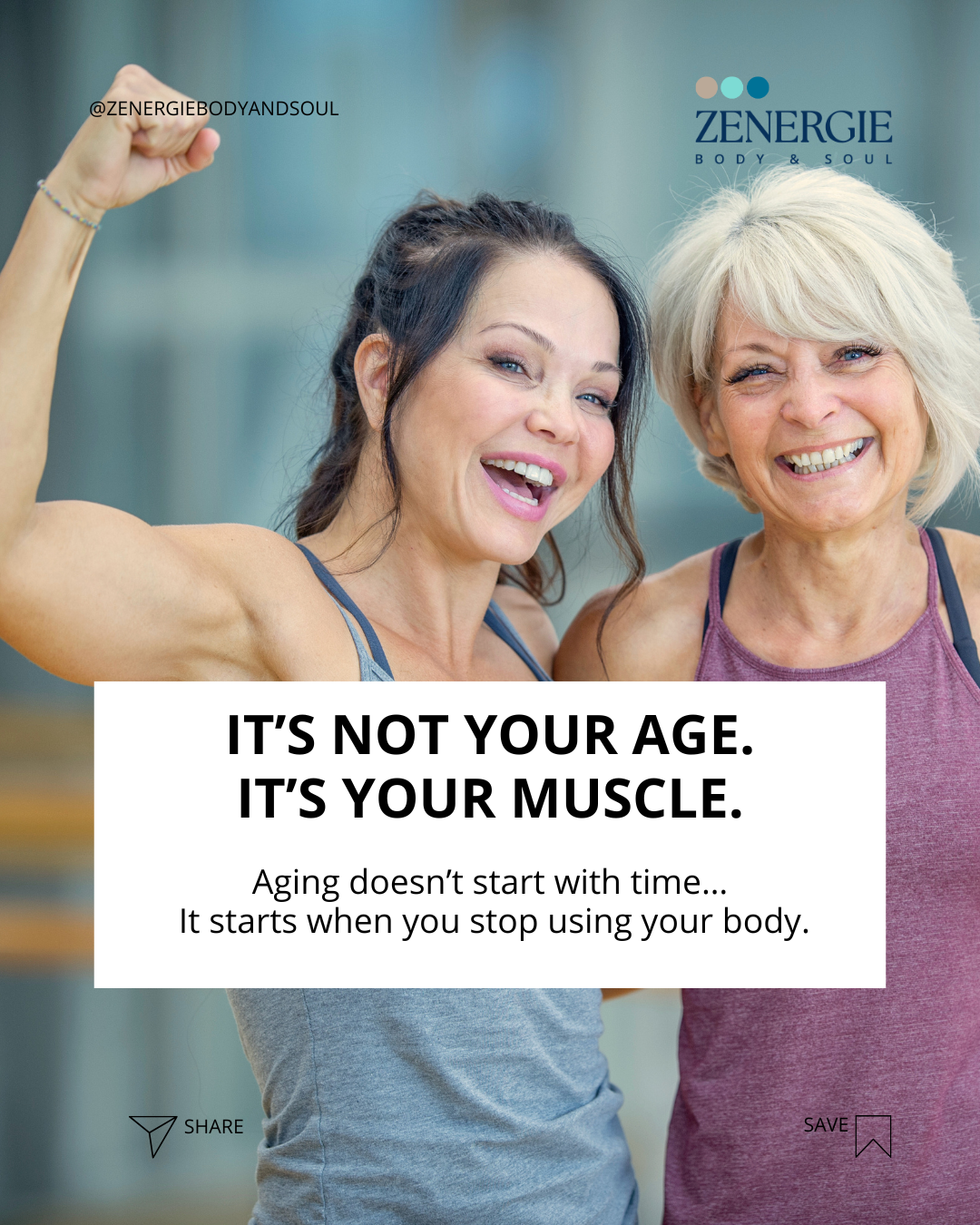
Ageing is often described as something that simply happens with time.
Another birthday arrives, another year passes and the body gradually becomes weaker, slower and less capable. This narrative is so familiar that many people accept physical decline as an unavoidable consequence of getting older.
But time is only part of the story.
How we use the body matters. How often we move matters. Whether we challenge our muscles matters.
Many of the changes commonly associated with ageing are closely connected to inactivity and the gradual loss of muscle mass. This does not mean that ageing can be stopped, but it does mean that strength, mobility and independence can often be protected far more effectively than people realise.
The real question is not simply how old we are.
It is how much physical capacity we are preserving as the years pass.
The Silent Loss of Muscle
Muscle loss often happens gradually.
It may begin without obvious symptoms. A person does not suddenly wake up feeling dramatically weaker. Instead, everyday tasks become slightly more difficult over time.
Stairs feel more demanding. Carrying shopping requires more effort. Recovery takes longer. Balance becomes less reliable. Activities that once felt normal begin to require greater concentration or assistance.
Because this change is slow, it is easy to dismiss.
People may assume that reduced strength is simply part of getting older. In reality, inactivity can accelerate the process significantly.
From early adulthood onward, muscle mass may begin to decline if it is not actively maintained. The rate of loss can become greater with age, particularly when strength training, regular movement and adequate nutrition are absent.
This loss affects far more than appearance.
It influences energy, metabolism, mobility, resilience and long-term independence.
Muscle Is Not Only About Strength
Muscle is commonly associated with athletic performance or aesthetics.
People think of visible definition, heavy weights or physical power. But muscle is also an active and essential part of human health.
It supports movement and posture. It protects joints and helps stabilise the body. It plays an important role in balance and reduces the effort required for daily activities.
Muscle also contributes to metabolic health.
It helps the body use glucose, supports insulin sensitivity and influences how energy is stored and used. It also plays a role in inflammatory and hormonal processes.
This is why muscle should not be treated as something relevant only to athletes.
It is a longevity organ.
Preserving it supports the systems that allow the body to remain capable and resilient throughout life.
Muscle and Metabolic Health
One of the most important roles of muscle is its relationship with metabolism.
Muscle tissue requires energy. It helps regulate blood sugar by taking up glucose from the bloodstream and using it for movement and recovery.
When muscle mass decreases, the body may become less efficient at managing energy.
This can contribute to changes in blood sugar regulation, insulin sensitivity and body composition. Metabolism may slow, while visceral fat can become more likely to accumulate.
Visceral fat is the fat stored around internal organs. It is metabolically active and associated with higher levels of inflammation and increased health risk.
The relationship between muscle and fat is therefore not only visual.
It affects how the entire body functions.
Maintaining muscle supports a healthier metabolic environment and gives the body a larger reserve for movement, recovery and daily energy use.
What Happens When Muscle Declines
The effects of muscle loss tend to reinforce one another.
As strength decreases, movement may become more difficult. When movement becomes difficult, people often become less active. Reduced activity can then accelerate further muscle loss.
This creates a cycle.
Less muscle leads to lower capacity. Lower capacity leads to less movement. Less movement creates more decline.
At the same time, reduced muscle mass can be accompanied by slower metabolism, increased fat accumulation and greater inflammation.
Joints may receive less support. Balance can worsen. The risk of falls and injury can increase.
The body also has less reserve during periods of illness or enforced inactivity.
Someone with greater strength and muscle mass may recover more effectively after a setback than someone who begins from a position of significant physical weakness.
Muscle is therefore not only useful when everything is going well.
It is also a form of protection when life becomes more demanding.
Strength Supports Independence
Independence is built through physical ability.
Getting out of a chair, carrying bags, climbing stairs, walking confidently and lifting everyday objects all require strength.
These actions may appear simple, but they are fundamental to quality of life.
When strength declines, daily routines become more difficult. People may begin avoiding certain activities or depending more heavily on others.
That loss of confidence can affect social life as well as physical health.
Someone who worries about falling may stop walking outdoors. Someone who finds stairs difficult may avoid visiting certain places. Someone who tires easily may participate less in family or community activities.
Strength supports more than movement.
It supports freedom.
The ability to continue choosing how and where to live is closely connected to the ability to move safely and confidently.
Ageing Does Not Begin with a Birthday
Chronological age tells us how many years a person has lived.
It does not fully explain how capable their body is.
Two people of the same age can have completely different levels of strength, mobility and energy. One may remain active and independent, while the other may experience significant limitations.
These differences are shaped by many factors, including genetics, health conditions and environment.
However, movement and muscle maintenance are also important.
A body that continues to be used receives a reason to adapt. A body that is rarely challenged gradually loses capacity.
This is why ageing does not simply begin with the passage of time.
In practical terms, decline often accelerates when the body is no longer used in ways that preserve its strength and function.
The Body Adapts to What We Ask of It
The human body is highly adaptive.
When muscles are challenged appropriately, they respond. They become stronger and more efficient. Bones also benefit from resistance and weight-bearing activity.
When the body is not challenged, it adapts in the opposite direction.
It reduces tissue that appears unnecessary. Strength, coordination and mobility gradually decline because they are no longer being demanded.
This principle applies at every age.
An older adult may not train in the same way as a younger athlete, but the body can still respond positively to an appropriate strength programme.
Progress may look different. Recovery needs may change. Exercises may need to be modified.
But adaptation remains possible.
That is one of the most hopeful messages in healthy ageing: the body can still improve when it receives a safe, consistent reason to do so.
Strength Training Is Not Extreme Training
Many people avoid strength training because they imagine heavy weights, intense sessions or environments that feel intimidating.
But effective strength training does not need to be extreme.
It can involve resistance machines, free weights, elastic bands, bodyweight exercises or controlled movements adapted to an individual’s ability.
The goal is not to lift the greatest possible weight.
The goal is to challenge the muscles sufficiently for them to adapt.
A well-designed programme can begin with simple movements such as sitting and standing from a chair, pushing, pulling, carrying and stepping.
These patterns reflect the actions people use in daily life.
Over time, resistance can be increased gradually as strength and confidence improve.
The most effective training is not the most exhausting.
It is the training that is safe, progressive and sustainable.
Consistency Matters More Than Intensity
Occasional intense effort cannot replace regular activity.
Muscle is maintained through repeated signals. The body needs consistent reminders that strength is necessary.
For many adults, two or three strength-focused sessions per week can provide a strong foundation when combined with daily movement.
The exact routine should depend on ability, health status and experience.
What matters most is that the programme can be maintained.
A moderate routine performed consistently is more useful than an extreme routine that causes exhaustion, injury or abandonment.
Consistency creates adaptation.
It also helps exercise become part of everyday life rather than a temporary project.
Daily Movement Still Matters
Strength training is important, but it should not be the only form of movement.
Walking, climbing stairs, carrying objects and changing position throughout the day all help maintain physical function.
Daily movement supports circulation, mobility and energy expenditure. It also reduces the amount of time the body spends completely inactive.
A structured workout cannot fully compensate for an otherwise sedentary day.
The strongest approach combines planned exercise with a generally active lifestyle.
This could include walking more often, standing regularly, taking the stairs, gardening, playing with children or completing everyday tasks with greater intention.
Small amounts of movement accumulate.
They help keep the body engaged between training sessions.
Protein and Muscle Maintenance
Training provides the stimulus for muscle adaptation, but the body also needs appropriate nutrition.
Protein supplies the building blocks used to repair and maintain muscle tissue.
Needs vary between individuals, and medical or nutritional guidance may be necessary in some cases. However, including suitable protein sources across the day can support recovery and muscle preservation.
Nutrition should not be viewed in isolation.
Protein cannot replace strength training, and training cannot compensate for consistently poor nutrition.
The two work together.
The body needs both a reason to maintain muscle and the resources required to do so.
Recovery Is Part of the Formula
Muscle is not built during the workout itself.
Training creates a stimulus. Recovery allows the body to adapt.
Sleep is one of the most important parts of this process.
Poor sleep can affect energy, hormonal regulation, appetite and training performance. It can also make consistency harder to maintain.
Rest days and lighter activity also have value.
The objective is not to push the body without interruption. It is to alternate appropriate challenge with sufficient recovery.
A sustainable longevity routine should make people feel stronger over time, not permanently exhausted.
Recovery is not a sign of weakness.
It is part of intelligent training.
Muscle and Joint Protection
Strong muscles help support and stabilise joints.
They absorb force and improve control during movement. This can make everyday activities feel safer and more comfortable.
Weakness can place greater stress on joints because the surrounding muscles are less able to manage load.
This does not mean that every joint problem can be solved through strength training. Pain and injury should be evaluated appropriately.
However, carefully adapted training can often play an important role in improving function and confidence.
The aim is not simply to create more muscle.
It is to improve how the whole body moves.
Strength and Bone Health
Resistance training also benefits the skeletal system.
Bones respond to mechanical loading, just as muscles respond to resistance. Appropriate strength and weight-bearing activity can help support bone density and physical resilience.
This becomes increasingly important with age, particularly when the risk of osteoporosis and fractures rises.
Muscle and bone work together.
Stronger muscles improve movement and balance, while stronger bones provide a more resilient structure.
Preserving both can reduce the consequences of falls and support long-term mobility.
The Relationship Between Muscle and Inflammation
Chronic inflammation is associated with many age-related health concerns.
Muscle is involved in metabolic and signalling processes that influence inflammation throughout the body.
Regular exercise can support healthier inflammatory regulation, especially when combined with appropriate recovery and nutrition.
Inactivity often contributes to the opposite environment.
Lower muscle mass, increased visceral fat and reduced metabolic efficiency can reinforce one another.
This is another reason why muscle should be understood as part of a wider health system rather than an isolated physical feature.
Strength Builds Confidence
Physical progress changes how people see themselves.
Being able to lift something that once felt difficult creates confidence. Improving balance reduces fear. Moving more easily makes activity feel less threatening.
This psychological effect matters.
People who trust their bodies are more likely to remain active. They are more willing to try new activities, travel, socialise and participate in everyday life.
Confidence encourages movement, and movement helps preserve capability.
Strength training can therefore support emotional well-being as well as physical health.
It reminds people that improvement remains possible.
The Goal Is Not to Look Younger
Longevity culture can sometimes become overly focused on reversing age or appearing younger.
That is not the most useful objective.
The purpose of preserving muscle is not to imitate a younger body.
It is to remain capable in the body you have now.
Strength allows people to continue doing what matters to them. It supports independence, participation and resilience.
A person does not need to look younger to age well.
They need the physical capacity to continue living fully.
Muscle as Longevity Insurance
Insurance protects against future risk.
Muscle works in a similar way.
It creates reserve.
That reserve may help during illness, surgery, injury or periods of reduced activity. It provides a stronger starting point for recovery.
It also supports everyday life long before a crisis occurs.
Every training session contributes to that reserve. Every walk, balanced meal and night of quality sleep supports the same objective.
The value may not always be immediately visible.
But over years, the difference can become significant.
Muscle is therefore one of the most practical forms of longevity insurance available.
You Do Not Need to Wait
Many people begin thinking about strength only after they notice significant weakness.
But prevention is easier than rebuilding from severe decline.
The best time to protect muscle is before it becomes a major limitation.
That does not mean it is ever too late to begin.
People can improve strength at many ages, provided the programme is appropriate and consistent.
Starting today may mean completing a short walk, learning a few basic exercises or booking an assessment with a qualified professional.
The first step does not need to be dramatic.
It only needs to be repeatable.
A Practical Formula for Stronger Ageing
There is no single perfect routine, but the foundations are clear.
Strength training two or three times per week can help preserve and build muscle.
Regular daily movement keeps the body active outside structured sessions.
Adequate protein supports repair and maintenance.
Quality sleep and recovery allow adaptation.
Consistency brings these elements together.
None of them requires an extreme lifestyle.
The strongest results often come from simple habits repeated over time.
It Is Not Your Age. It Is How You Use Your Body.
Ageing is real.
The body changes, and some of those changes cannot be avoided.
But decline is not determined by time alone.
How we move, train, recover and care for the body influences the level of capability we preserve.
Muscle affects energy, metabolism, joint support, balance and independence. It is not a cosmetic extra.
It is part of the infrastructure of healthy ageing.
The objective is not to fight time.
It is to build enough strength to continue living well as time passes.
Your muscle is your longevity insurance.
Do not wait until you have lost it to begin taking care of it.