Is Zenergie for Me? A More Human Approach to Fitness and Well-Being
Have you ever felt that fitness was not designed for you?
Perhaps you do not recognise yourself in the images used by traditional gyms. Maybe you joined before, started with motivation and gradually stopped attending. Life may have become too busy, your priorities may have changed or you may simply have lost confidence in your ability to begin again.
These experiences are more common than they appear.
Many people care about their health and want to feel better, but they do not identify with conventional fitness culture. They may feel that gyms are only for people who are already young, strong, experienced or highly motivated.
At Zenergie Body & Soul, we believe fitness should begin from a very different idea.
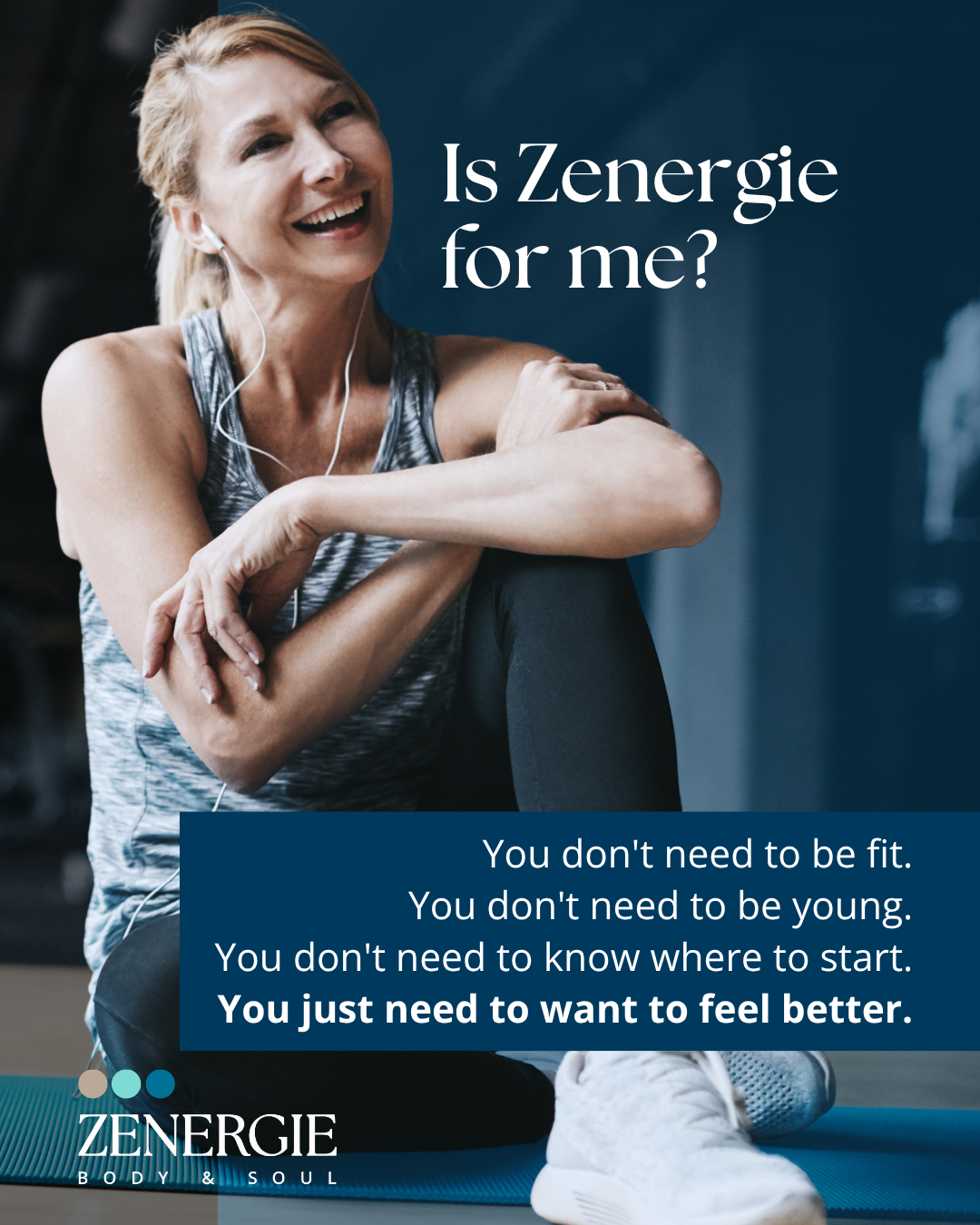
You do not need to be fit before you start.
You do not need to be young.
You do not need to understand every machine or know exactly what programme to follow.
You only need to want to feel better.
Fitness Should Meet You Where You Are
Every person arrives with a different body, history and reason for beginning.
Some people have exercised throughout their lives. Others are returning after years of inactivity. Some want to rebuild strength after a difficult period, while others are looking for more energy, better mobility or a healthier way to manage stress.
There is no single correct starting point.
A truly inclusive fitness experience should adapt to the individual rather than expecting the individual to fit into a standardised model.
This means recognising different abilities, limitations and levels of confidence. It means providing guidance without judgment and progress without unnecessary pressure.
The goal is not to compare your beginning with someone else’s progress.
It is to create a path that makes sense for you.
You Do Not Need to Get Fit Before Joining
One of the most common barriers to exercise is the belief that a person must already be in reasonable shape before entering a fitness environment.
This creates an impossible situation.
People delay beginning because they feel unprepared, but without beginning, they never have the opportunity to build confidence or improve their physical condition.
A supportive fitness model removes that barrier.
You should be able to arrive exactly as you are and receive the help needed to take the next appropriate step.
That step may be learning a basic movement, completing a short session or simply becoming comfortable in the space.
Progress does not need to begin with intensity.
It begins with participation.
You Do Not Need to Be Young
Fitness marketing has traditionally focused heavily on younger bodies and performance-driven goals.
This can create the impression that exercise belongs primarily to a certain age group.
In reality, movement becomes increasingly important throughout adulthood.
Strength supports mobility, balance and independence. Regular activity contributes to cardiovascular and metabolic health. Mindful movement can support stress management and emotional well-being.
These benefits are relevant at every age.
The programme may need to change as the body changes, but the value of movement does not disappear.
A person does not become too old to benefit from strength, mobility or community.
The most effective approach is not to ignore age, but to create training that respects the individual while continuing to build capability.
You Do Not Need to Know Where to Start
A traditional gym can be overwhelming.
There may be rows of unfamiliar equipment, different training zones and people who appear to know exactly what they are doing.
For someone without experience, this environment can create uncertainty rather than motivation.
Where should you begin?
Which exercises are appropriate?
How much weight should you use?
How do you know whether your technique is correct?
These questions should not become the member’s responsibility to solve alone.
A good fitness experience provides structure.
Professional guidance, clear programming and intelligent technology can remove uncertainty and help each person train with greater confidence.
You should not need expert knowledge before you begin.
The system should help you learn as you progress.
Feeling Better Is a Valid Goal
Not everyone enters fitness with a dramatic transformation in mind.
Some people simply want more energy.
Others want to sleep better, reduce stress or feel stronger during everyday activities.
Someone may want to walk without becoming tired, carry shopping more comfortably or regain the confidence to participate in activities they have gradually stopped doing.
These are meaningful goals.
Fitness should not be measured only through weight, appearance or athletic performance.
Progress can also mean moving more comfortably, having greater mental clarity or feeling more capable in daily life.
A programme centred on well-being recognises these outcomes as valuable.
More Energy for Everyday Life
Energy influences almost everything we do.
When energy is low, work, relationships and daily responsibilities can feel more demanding. Exercise may appear like another task rather than a solution.
However, regular and appropriately designed movement can support better energy over time.
The key is not to begin with sessions that create excessive fatigue.
Training should gradually build capacity.
As strength and cardiovascular fitness improve, everyday activities may require less effort. The body becomes better prepared for the demands placed upon it.
This can create a positive cycle.
More movement supports greater capacity, and greater capacity makes movement easier to maintain.
Strength for Life
Strength is not only for athletes.
It is required for everyday independence.
Standing up, climbing stairs, carrying objects and maintaining balance all depend on muscular strength.
As people age, preserving this capacity becomes increasingly important.
Strength training can help support muscle mass, joint stability and confidence in movement. It can be adapted to different starting points and does not require extreme weights or complex exercises.
The objective is not to become the strongest person in the room.
It is to become strong enough for your own life.
That may mean feeling more confident, protecting future mobility or continuing to enjoy the activities that matter to you.
Less Stress and Greater Balance
Well-being is not only physical.
Stress affects sleep, concentration, energy and the ability to maintain healthy routines.
Exercise can provide an important space to disconnect from daily pressure and reconnect with the body.
Different forms of movement serve different needs.
Strength training can create focus and release tension. Walking can provide calm and mental space. Mobility and breathing exercises can help reduce physical tension and support recovery.
A complete approach to wellness allows these elements to work together.
The goal is not constant intensity.
It is balance.
A Better Quality of Life
Health is not simply the absence of illness.
It is the capacity to participate fully in everyday life.
Can you move comfortably?
Do you have enough energy for the people and activities you value?
Do you feel confident in your body?
Can you manage daily stress without feeling permanently exhausted?
Fitness should support these broader questions.
The most meaningful result is not necessarily a number on a scale or a record in the gym.
It is a better lived experience.
That is what quality of life means.
Wellness Is Not About Being the Best
Traditional fitness environments can sometimes feel competitive.
People compare bodies, performance and progress. Those who are beginning may feel that everyone else is already ahead.
But wellness is not a competition.
The person next to you may have a different history, goal and level of experience. Their progress does not reduce the value of your own.
A healthier model focuses on individual improvement.
It asks whether you feel stronger than before, whether movement has become easier and whether the routine is supporting your well-being.
The objective is not to become better than someone else.
It is to become a healthier and more capable version of yourself.
Starting Again Is Still Starting
Many people have tried exercise before and stopped.
This can create frustration or embarrassment. They may believe that previous attempts prove they lack discipline.
But stopping does not mean that future progress is impossible.
People stop for many reasons.
Work changes. Family responsibilities increase. Health challenges appear. The original programme may have been unrealistic or the environment may not have provided enough support.
Returning should not be seen as failure.
It is a new starting point informed by previous experience.
The important question is not why the last attempt ended.
It is what kind of support would make the next attempt more sustainable.
Confidence Can Be Rebuilt
Physical confidence develops through experience.
It grows when people complete movements they once found difficult, understand how to train safely and notice gradual improvements.
This process takes time.
A supportive environment makes it easier because people are not expected to prove themselves before receiving help.
They are allowed to learn.
Small successes matter.
Completing a first session, increasing resistance slightly or attending consistently for several weeks can all strengthen confidence.
Eventually, exercise becomes less unfamiliar.
The person begins to trust both the process and their own body.
Personalisation Makes Fitness More Accessible
Generic routines often fail because they assume everyone has the same needs.
A personalised approach considers physical ability, previous experience, goals and limitations.
This does not necessarily mean that every session must be one-to-one.
Small-group training, professional supervision and intelligent systems can create an experience that remains personal while also offering social connection.
Exercises can be adapted.
Progression can happen at the right pace.
The individual receives support without feeling isolated.
This balance makes fitness more accessible to people who may otherwise feel excluded by conventional environments.
Community Without Intimidation
Exercise becomes easier to maintain when people feel that they belong.
A strong community creates encouragement and accountability without turning the experience into competition.
Members recognise one another. Trainers know their names and understand their progress. Attendance becomes connected to relationships rather than relying only on personal motivation.
This is particularly valuable for people who have felt uncomfortable in traditional gyms.
A welcoming community changes the atmosphere.
It allows people to be beginners without feeling embarrassed and to progress without constantly comparing themselves to others.
Belonging can be one of the strongest reasons to continue.
The Zenergie Approach
Zenergie Body & Soul was created for people who want to feel better but may not identify with traditional fitness.
The model is built around intelligent training, strength, mindfulness and community.
It recognises that long-term well-being requires more than equipment.
People need guidance, structure and an environment that feels human.
Training should support physical capacity.
Mindfulness and recovery should support mental balance.
Community should create connection and consistency.
Together, these elements create a broader vision of fitness focused on active longevity and quality of life.
Training for the Life You Want
Exercise should serve life.
It should help you do more of what matters, not become another source of pressure.
For one person, the goal may be travelling comfortably. For another, it may be playing with grandchildren, returning to a favourite activity or simply waking up with more energy.
These goals are deeply personal.
A meaningful programme begins by understanding them.
Once the purpose is clear, training becomes more relevant.
Strength exercises are no longer abstract movements. They become preparation for independence.
Mobility work supports confidence.
Mindful movement helps create balance.
The routine connects directly to the life the person wants to continue living.
Progress Does Not Need to Be Dramatic
Modern fitness culture often celebrates rapid transformation.
But long-term well-being is usually built through gradual change.
Progress may appear as improved posture, better sleep or increased confidence. It may be completing an activity with less effort or returning consistently after a busy week.
These improvements can be easy to overlook because they are not always visually dramatic.
However, they are often more meaningful and sustainable.
A successful programme helps people notice this wider form of progress.
It shows that health is changing even when the transformation is not extreme.
There Is No Perfect Time to Begin
People often wait for the right moment.
They plan to begin when work becomes quieter, when motivation improves or when they already feel slightly fitter.
That moment may never arrive.
Beginning does not require perfect circumstances.
It requires one manageable action.
This could be attending an initial assessment, taking a short walk or learning the first few exercises.
The routine can grow over time.
Waiting until everything feels easy only delays the opportunity to build confidence.
It is acceptable to begin uncertainly.
Support exists precisely because people do not need to know everything from the first day.
Your Starting Point Is Enough
There is no minimum level of fitness required to care about your health.
There is no age at which improvement stops being worthwhile.
There is no previous failure that disqualifies you from beginning again.
Your current condition is simply information.
It helps determine the appropriate next step.
A good programme does not judge the starting point.
It uses it.
From there, progress becomes possible through guidance, consistency and patience.
Is Zenergie for You?
Zenergie may be for you if you want to feel stronger but do not know where to begin.
It may be for you if traditional gyms have felt uncomfortable, confusing or irrelevant.
It may be for you if your goal is more energy, less stress and a healthier future rather than extreme physical transformation.
It may be for you if you value personal guidance, intelligent training and a supportive community.
Most importantly, it may be for you if you are ready to take one step toward feeling better.
You do not need to arrive fit.
You do not need to arrive young.
You do not need to arrive confident.
Confidence, strength and consistency can be built.
You only need a reason to begin.
Becoming the Healthiest Version of Yourself
Wellness is not about meeting someone else’s standard.
It is about protecting and improving your own quality of life.
That process will look different for every person.
The healthiest version of you may not be the fastest or strongest person in the room.
It may simply be someone who feels more energetic, moves with greater confidence and manages daily life with less stress.
That is enough.
Progress begins when health becomes personal rather than performative.
Wherever you are starting from, the next step can still matter.
The real question is not whether you already belong in fitness.
It is what feeling better would look like for you.