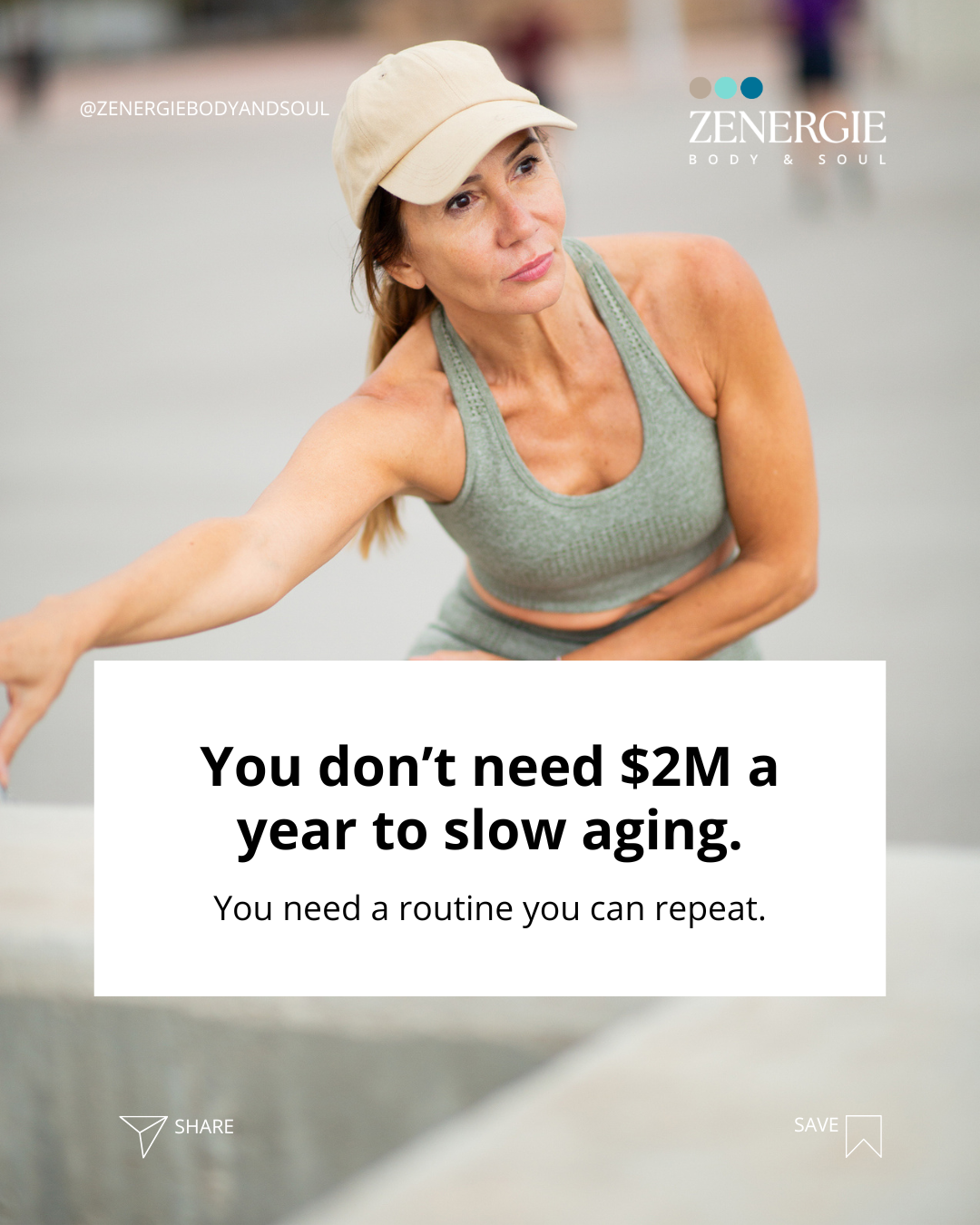
You Don’t Need Millions to Slow Ageing. You Need a Routine You Can Repeat.
Longevity is often presented as something expensive, complex and difficult to achieve.
We hear about advanced treatments, exclusive clinics, endless supplements and highly restrictive routines. But living a longer, healthier life does not necessarily require extreme measures.
In most cases, the foundations of healthy ageing are much simpler:
- Move your body regularly.
- Build and maintain muscle.
- Eat nourishing foods.
- Prioritise recovery.
- Sleep well.
- Repeat these habits consistently.
Longevity is not something you buy. It is something you build every day.
Consistency Matters More Than Perfection
The most effective routine is not the most advanced one.
It is the one you can maintain.
Complicated plans often create excitement at the beginning, but they are difficult to sustain over time. Real progress comes from simple habits that fit naturally into your lifestyle.
You do not need to follow every wellness trend or transform your entire life overnight. Start with a few realistic actions and repeat them until they become part of your routine.
The objective is not perfection.
The objective is consistency.
Start the Day with Intention
A healthy morning routine can create a sense of stability and prepare both the body and mind for the day ahead.
Simple habits can include:
- Waking up at a consistent time.
- Spending a few quiet minutes reading or reflecting.
- Choosing water or green tea instead of a sugary drink.
- Taking a short walk or stretching gently.
- Avoiding immediate exposure to notifications and social media.
These actions may appear small, but they help create structure and encourage healthier decisions throughout the rest of the day.
Longevity starts before the world wakes up.
Muscle Is Your Long-Term Insurance Policy
Strength training becomes increasingly important as we age.
Over time, the body naturally begins to lose muscle mass. Without regular resistance training, this process can affect metabolism, bone density, balance and mobility.
Maintaining muscle supports:
- Greater physical independence.
- Stronger bones and joints.
- Better balance and stability.
- Improved energy levels.
- Increased confidence.
- A longer active life.
Strength is not only about appearance or athletic performance.
It is about being able to carry your shopping, climb stairs, travel, play with your family and continue enjoying everyday life without unnecessary limitations.
A balanced weekly routine could combine several strength-training sessions with regular cardiovascular activity, adapted to each person’s experience and physical condition.
Muscle is not just for performance. Muscle is medicine.
Movement Should Be Sustainable
Exercise does not need to be extreme to be effective.
The best approach combines different types of movement:
Strength training
Resistance exercises help preserve muscle mass, improve bone health and maintain independence.
Cardiovascular exercise
Walking, cycling, swimming and similar activities support heart health, endurance and energy.
Mobility and balance
Stretching, controlled movement and balance exercises can help maintain flexibility and reduce the risk of falls.
The goal is not to exhaust the body every day.
It is to challenge it regularly, recover properly and continue progressing over time.
Recovery Builds Resilience
Training is important, but recovery is where the body adapts.
Without enough recovery, even a well-designed exercise routine can lead to fatigue, stress and reduced performance.
Useful recovery habits may include:
- Gentle stretching.
- Deep breathing.
- Meditation or mindful movement.
- Rest days.
- Sauna or cold exposure when appropriate.
- Spending time outdoors.
- Reducing unnecessary sources of stress.
Recovery should not be treated as inactivity.
It is an essential part of physical and mental progress.
Stress your body wisely, so everyday life places less stress on you.
Eat Simply and Prioritise Quality
Healthy eating does not have to involve constant calorie counting or complicated meal plans.
A sustainable approach begins with clear priorities:
- Eat vegetables every day.
- Include enough protein.
- Choose whole and minimally processed foods.
- Drink enough water.
- Maintain regular meal patterns.
- Enjoy food without turning every decision into a source of stress.
Protein becomes particularly important as we age because it supports muscle maintenance and recovery. Vegetables, fruit, whole grains and healthy fats provide the nutrients the body needs to function effectively.
There is no need to pursue a perfect diet.
Simple systems usually work better than complicated rules.
Sleep Is One of the Most Powerful Longevity Tools
Sleep affects almost every system in the body.
It supports recovery, hormonal balance, cognitive function, mood, immune health and physical performance. Yet it is often the first healthy habit people sacrifice when life becomes busy.
A better evening routine may include:
- Going to bed at a similar time each night.
- Reducing bright light before sleeping.
- Limiting screens and stimulating content.
- Taking a calm evening walk.
- Keeping the bedroom cool, dark and quiet.
- Creating enough time to sleep without rushing.
Sleep is not lost time.
It is one of the most accessible and effective tools available for long-term wellbeing.
Healthy Ageing Is Built Through Everyday Choices
There is no single habit that guarantees longevity.
Healthy ageing is the result of many small decisions repeated over time:
- Choosing movement instead of prolonged inactivity.
- Protecting muscle through strength training.
- Eating foods that support the body.
- Giving yourself time to recover.
- Sleeping consistently.
- Returning to your routine after interruptions.
Life will not always follow the plan.
There will be busy weeks, holidays, stressful periods and unexpected changes. Missing a workout or breaking a routine does not erase your progress.
The real skill is learning to begin again.
The Secret Is Returning to the Routine
Extreme discipline is not the answer.
A sustainable routine must be flexible enough to survive real life. It should support you rather than make you feel constantly judged or restricted.
The people who achieve long-term results are not necessarily those who never miss a day.
They are the ones who return to their habits every time life interrupts them.
You do not need millions to invest in your longevity.
You need a routine that supports your body, protects your mind and can be repeated for years to come.
Build it simply. Practise it consistently. Return to it whenever necessary.