The Most Powerful Anti-Aging Medicine Is Muscle
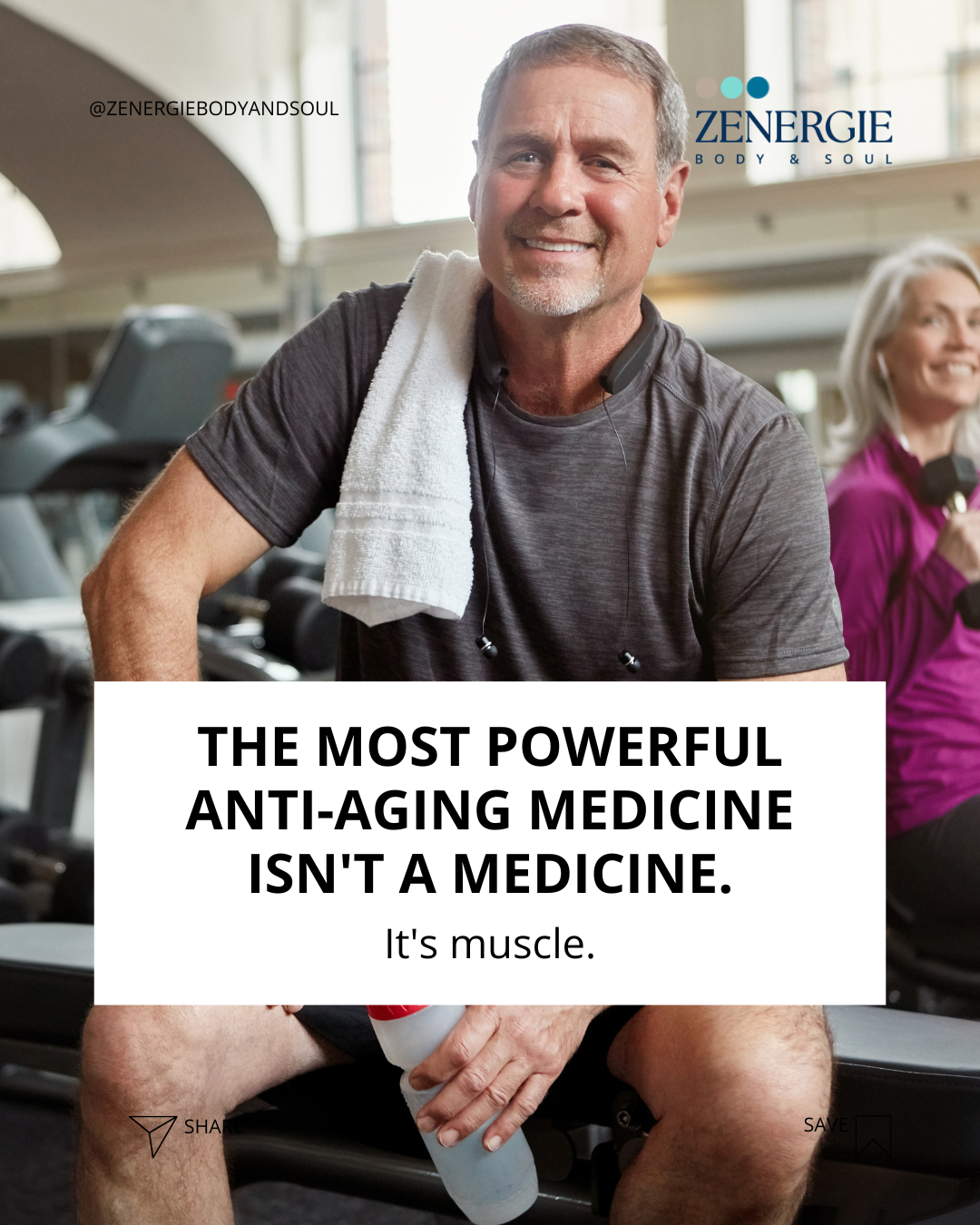
The conversation around ageing often focuses on what we lose with time.
Energy decreases. Recovery becomes slower. Mobility may become more limited. Everyday tasks that once felt effortless can gradually require more attention and physical effort.
These changes are commonly accepted as unavoidable consequences of growing older.
But ageing is not driven by time alone.
One of the most important factors influencing how well we age is muscle.
Muscle is not simply about appearance, athletic performance or lifting heavy weights. It supports mobility, metabolism, bone health, balance, independence and resilience.
That is why muscle can be understood as one of the most powerful tools available for healthy ageing.
It is not a medicine in the traditional sense.
But preserving and rebuilding it can influence almost every aspect of long-term health.
Muscle Loss Begins Earlier Than Many People Realise
Muscle loss does not begin only in old age.
From around the age of 30, adults can gradually begin losing muscle mass, particularly when they do not remain physically active or include strength-based exercise in their routines.
This decline may occur slowly at first.
It is easy to overlook because the body can compensate for a long time. A person may still complete daily activities, work and move independently without noticing significant changes.
However, the effects accumulate.
Over the years, carrying objects may become more difficult. Stairs may feel more demanding. Balance can become less reliable, and recovery after illness or inactivity may take longer.
After the age of 60, muscle decline can accelerate.
The process becomes especially significant when it is combined with a sedentary lifestyle, inadequate nutrition or long periods of physical inactivity.
Understanding Sarcopenia
The age-related loss of muscle mass, strength and physical function is commonly known as sarcopenia.
Sarcopenia is not simply a cosmetic change.
It can affect the ability to move safely, maintain balance and complete everyday tasks independently.
As muscle declines, the risk of falls may increase. Reduced physical capacity can make it more difficult to walk, climb stairs, stand up from a chair or recover after a period of illness.
Over time, this can contribute to a loss of independence.
The effects can extend beyond movement.
Low muscle mass is also associated with poorer metabolic health and an increased risk of chronic disease.
This is why preserving muscle should be considered a central part of preventive health.
Strength Is More Important Than Appearance
Fitness culture has often presented muscle through the lens of aesthetics.
Images of defined bodies and athletic performance can create the impression that strength training is mainly for younger people, athletes or those pursuing physical transformation.
In reality, the most important benefits of muscle are functional.
Muscle allows us to move.
It helps us maintain posture, stabilise joints and control the body during everyday activities.
It enables us to carry shopping, lift objects, climb stairs and remain confident when walking.
These abilities directly influence quality of life.
A person does not need to look muscular to benefit from strength.
They need sufficient muscle to remain capable.
Muscle Supports Physical Function
Physical function describes the body’s ability to perform daily activities effectively and safely.
This includes simple movements that are often taken for granted.
Standing from a chair.
Walking at a comfortable pace.
Reaching, bending and carrying.
Maintaining balance when changing direction or stepping over an obstacle.
All of these actions require muscle strength and coordination.
When strength declines, daily movement becomes less efficient.
Tasks require more effort, and people may begin avoiding activities that feel physically challenging.
This can create a cycle in which reduced movement causes further physical decline.
Strength training helps interrupt that cycle by giving the body a reason to preserve and rebuild capacity.
Muscle and Independence
Independence is deeply connected to physical ability.
The freedom to live alone, travel, shop and participate in social activities depends partly on the body’s ability to respond to everyday demands.
When strength is lost, people may require increasing levels of assistance.
This can affect confidence as well as practical independence.
A person who no longer trusts their balance may avoid leaving home. Someone who struggles with stairs may stop visiting certain places.
These limitations can gradually reduce social participation and quality of life.
Preserving muscle helps protect the freedom to continue making choices.
Strength is therefore not only a physical resource.
It is part of personal autonomy.
Muscle Supports Bone Health
Muscle and bone work together.
When muscles contract during strength training, they apply force to the bones. This mechanical stimulus can help support bone density and structural resilience.
This becomes increasingly important with age.
Bone density may decline over time, increasing the risk of osteoporosis and fractures.
Strength training cannot eliminate every risk, but it can form an important part of a broader strategy for protecting bone health.
It also improves the strength and control required to reduce the likelihood of falls.
By supporting both muscle and bone, resistance exercise helps create a more resilient body.
The Relationship Between Muscle and Balance
Balance is not controlled by one system alone.
It depends on muscle strength, coordination, vision, joint awareness and the nervous system working together.
When lower-body strength declines, the body may become less capable of responding quickly to changes in position.
A small trip or uneven surface can become more difficult to manage.
Strength training can improve the physical capacity needed to stabilise the body.
Exercises involving the legs, hips and core are particularly valuable because these areas contribute directly to standing, walking and changing direction.
Balance training can also be included alongside strength work.
Together, these approaches help people move with greater confidence.
Strength Training and Metabolic Health
Muscle is metabolically active tissue.
It plays an important role in how the body uses and stores energy.
During movement, muscles use glucose as fuel. Regular strength training can support insulin sensitivity and improve the body’s ability to regulate blood sugar.
This makes muscle relevant to the prevention and management of metabolic conditions.
As muscle mass declines, the body may become less efficient at processing energy.
This can contribute to changes in body composition, blood sugar regulation and overall metabolism.
Preserving muscle helps create a healthier metabolic environment.
It supports both physical function and internal health.
Muscle and Chronic Disease Risk
Low muscle mass and poor physical capacity are associated with an increased risk of several chronic health problems.
These can include metabolic disease, cardiovascular conditions and reduced mobility.
The relationship is complex and influenced by many factors, but muscle remains an important part of the picture.
Strength training supports movement, body composition and metabolic regulation.
It can also make other healthy behaviours easier.
A stronger person may find it easier to walk, remain active and participate in daily life.
This creates a positive cycle in which greater capacity supports continued activity, and continued activity helps preserve health.
Cognitive Performance and Physical Strength
The benefits of strength training may also extend to the brain.
Physical activity supports blood flow, coordination and nervous system function. Learning and performing movements requires concentration, memory and body awareness.
Strength training can therefore provide both physical and cognitive stimulation.
Some research has explored the relationship between physical strength and cognitive performance, particularly in older adults.
Although no single exercise can guarantee cognitive protection, staying physically active forms an important part of a broader healthy-ageing strategy.
Movement keeps the body engaged.
It also gives the brain regular challenges to process and adapt to.
Muscle Strength as a Marker of Healthy Ageing
Researchers increasingly view muscle strength as an important indicator of overall health.
Strength reflects more than the size of a muscle.
It is influenced by the nervous system, coordination, nutrition, activity level and physical resilience.
A strong body is often better equipped to manage daily demands and recover after setbacks.
This is why measures of strength and function can provide valuable information about how a person is ageing.
Chronological age tells us how many years someone has lived.
Physical strength helps show how capable the body remains during those years.
The Good News: Muscle Can Be Rebuilt
Age-related muscle loss is not entirely irreversible.
The body can continue adapting to strength training at many different ages.
Progress may happen more slowly in later life, and programmes may need to be adjusted for health conditions or physical limitations.
But improvement remains possible.
People can gain strength, improve balance and rebuild physical confidence.
This is an important message because many adults assume that once muscle has been lost, it cannot be recovered.
The reality is more hopeful.
The body responds when it is challenged appropriately and consistently.
Strength Training Does Not Need to Be Extreme
Building muscle does not require bodybuilding or highly intense workouts.
Effective strength training can involve machines, resistance bands, bodyweight exercises or free weights.
The most appropriate method depends on the person.
Someone beginning after years of inactivity may start with simple movements such as sitting and standing from a chair.
Another person may use resistance machines that guide the body through a controlled movement.
The objective is not to lift the maximum possible weight.
It is to provide the muscles with enough resistance to stimulate adaptation.
Over time, the challenge can increase gradually.
The Importance of Progressive Training
For muscles to become stronger, the body needs a reason to adapt.
This means that training must gradually become more challenging.
Progressive training may involve increasing resistance, completing more repetitions or improving movement control.
The progression should be gradual and appropriate.
Moving too quickly can increase the risk of discomfort or injury. Never increasing the challenge may limit improvement.
A well-designed programme finds the balance.
It helps the person progress without making the experience feel overwhelming.
Professional guidance can be especially valuable for beginners and older adults.
Training for Real Life
Strength training is most meaningful when it supports everyday function.
Exercises can reflect the movements people use in daily life.
Squatting supports the ability to sit and stand.
Pulling and pushing movements help with doors, objects and household tasks.
Carrying exercises support shopping and travel.
Step-based movements prepare the body for stairs and uneven surfaces.
Training becomes more relevant when people understand how each exercise connects to their lives.
The goal is not to become strong only inside the gym.
It is to become stronger everywhere else.
Strength and Recovery from Illness
Periods of illness or inactivity can lead to rapid physical decline.
When someone spends extended time resting, muscle strength and mobility may decrease.
A person with more muscle and physical reserve may be better prepared to recover from these periods.
This is one reason muscle can be viewed as a form of health insurance.
It gives the body additional capacity before a setback occurs.
Building that reserve does not eliminate illness or injury.
But it can provide a stronger foundation for recovery.
The Role of Nutrition
Exercise provides the stimulus for muscle adaptation.
Nutrition provides the resources required for repair and growth.
Protein is particularly important because it supplies amino acids used to maintain muscle tissue.
Protein needs vary depending on age, activity level and health status.
A qualified healthcare or nutrition professional may be needed when there are specific medical considerations.
The broader principle is clear.
Strength training and nutrition work together.
The body needs both a reason to preserve muscle and the materials required to do so.
Sleep and Recovery
Training alone does not create progress.
The body also needs time to recover.
Sleep supports muscle repair, hormonal regulation and overall energy.
Poor sleep can make training feel more difficult and reduce the ability to remain consistent.
Recovery does not mean avoiding all movement.
Gentle walking and mobility work can often be included between strength sessions.
The objective is to balance challenge with restoration.
A good programme should gradually improve capacity rather than create constant exhaustion.
Consistency Matters More Than Perfection
Strength is built through repeated effort.
One intense workout cannot replace weeks of regular training.
A manageable routine completed consistently is more effective than an extreme programme that is quickly abandoned.
For many adults, two or three strength sessions per week can provide a useful foundation.
The exact schedule will depend on the individual.
The most important factor is sustainability.
The routine should fit realistically into life.
When training becomes a regular habit, the body receives the repeated stimulus needed to maintain and build muscle.
Strength Training at Any Age
There is no universal age at which strength training stops being useful.
The exercises may change, but the principle remains relevant.
Younger adults can build physical reserve before significant decline begins.
Middle-aged adults can protect muscle and prepare for the decades ahead.
Older adults can improve strength, balance and confidence.
The earlier the habit begins, the greater the opportunity to preserve capacity.
But it is rarely too late to benefit from movement.
The starting point may be different, but progress can still matter.
Confidence Is Part of Healthy Ageing
Strength affects how people feel about their bodies.
Improving physical capacity can reduce fear and increase confidence.
A person who feels stronger may be more willing to walk outdoors, travel or try new activities.
This confidence supports continued participation.
Participation encourages more movement.
More movement helps preserve capacity.
The physical and psychological benefits reinforce one another.
Strength training therefore supports more than muscle.
It can help people feel capable again.
Ageing with Purpose
Healthy ageing is not about trying to remain permanently young.
It is about preserving the ability to continue doing what matters.
This may include travelling, spending time with family, volunteering or enjoying hobbies.
Strength supports these possibilities.
It gives the body the capacity to remain involved.
Training becomes more meaningful when it is connected to a personal purpose.
People are not simply exercising for numbers or appearance.
They are preparing for the life they want to continue living.
Training with Professional Guidance
Strength training should be appropriate to the individual.
Medical history, injuries and current physical capacity must be considered.
Professional support can help identify the correct starting point and ensure that exercises are performed safely.
A qualified trainer can adapt movements, monitor technique and adjust the programme as the person progresses.
This guidance reduces uncertainty.
It also helps people understand why they are performing each exercise and how it supports their goals.
For many beginners, this support can make the difference between stopping and continuing.
A More Human Approach to Fitness
Traditional fitness environments can feel intimidating, especially for people who are older, inactive or unfamiliar with exercise.
A longevity-focused approach should be welcoming.
It should provide clear guidance and allow each person to progress at an appropriate pace.
The environment should celebrate capability rather than comparison.
This makes strength training accessible to people who may never have considered themselves part of fitness culture.
The goal is not to create athletes.
It is to help more people preserve their health and independence.
Train for Strength
Training for strength means investing in future capability.
It means building the physical resources required to move confidently, recover effectively and remain independent.
This does not require extreme routines.
It requires a clear programme, appropriate resistance and regular practice.
Every session sends a message to the body.
Strength is still needed.
That message becomes increasingly valuable as the years pass.
Move with Purpose
Movement is most sustainable when it has meaning.
Training should connect to real goals.
Being able to carry shopping.
Climbing stairs without difficulty.
Travelling comfortably.
Playing with grandchildren.
Remaining independent.
These are powerful reasons to move.
When exercise supports something personally meaningful, it becomes easier to understand its value.
Age with Confidence
Ageing with confidence does not mean pretending that the body never changes.
It means building enough strength and resilience to meet those changes.
Confidence comes from knowing that the body is being cared for.
It comes from noticing progress and understanding that improvement remains possible.
Strength training cannot stop time.
But it can influence how capable we remain as time passes.
Muscle Is a Longevity Tool
The phrase “anti-ageing” is often associated with products, treatments or promises of looking younger.
But the most meaningful form of anti-ageing may be far more practical.
Preserving physical capacity.
Maintaining muscle.
Protecting mobility.
Supporting independence.
Muscle does not make time disappear.
It helps the body remain better prepared for it.
That is why it can be considered one of the most powerful tools for healthy ageing.
Train for strength.
Move with purpose.
Age with confidence.